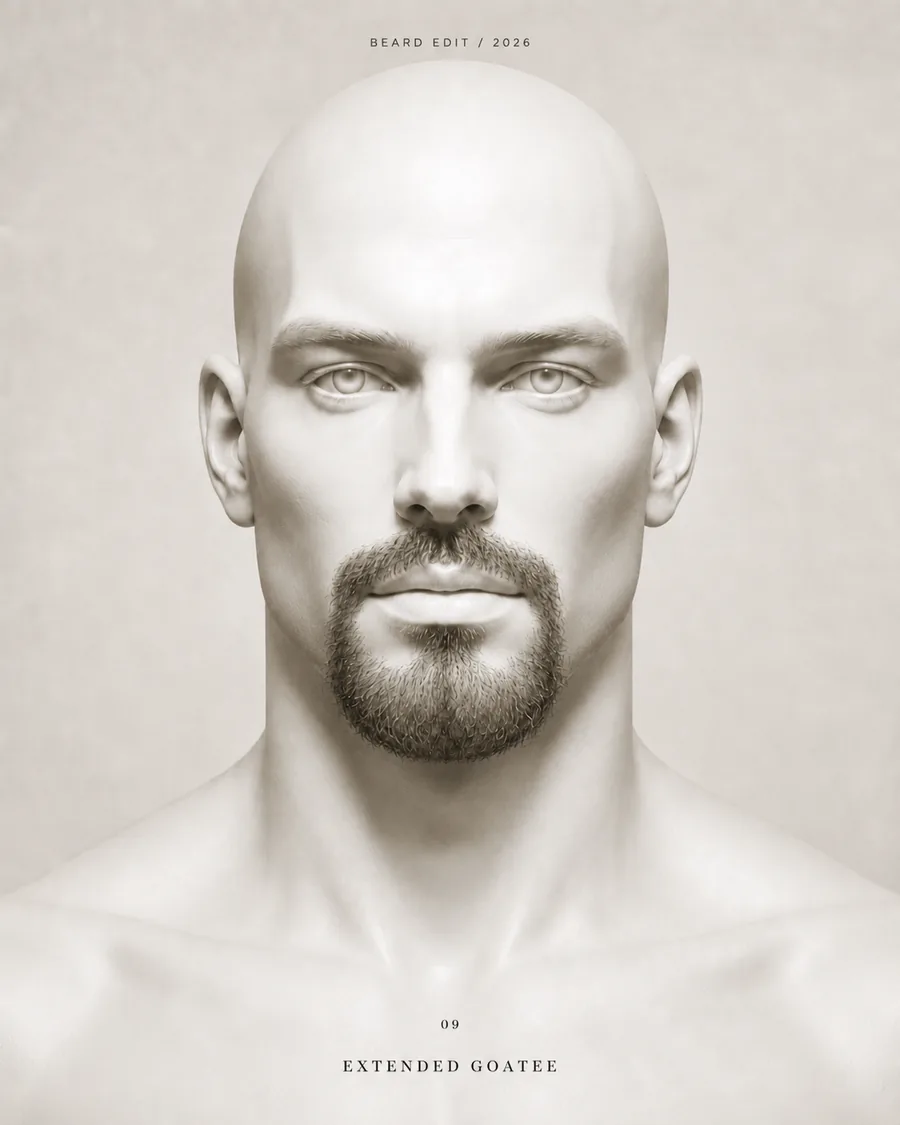
What the extended goatee actually is
Start with a circle beard, then extend the hair outward from the corners of the mouth along the jawbone, stopping well before the ear. The wings are what make it extended, and their length is the only real variable in the style — short wings read as a tidy goatee, long ones start to read as a beard with shaved cheeks. Sometimes called an anchor, because the shape it makes on the chin and jaw resembles one.
Who it suits
It works best on oval, square and heart-shaped faces, where a bit of jaw hair adds definition without adding cheek width. It needs growth along the jaw specifically. Many men with patchy cheeks still grow well along the jawline, which is what makes this a good step up from a circle beard — you get more coverage without depending on the cheek hair that will not come.
How to get it
- Grow for four to six weeks so the jaw hair is long enough to shape.
- Trim everything to a single length, around 5mm.
- Shave the cheeks clean, stopping at the jawbone.
- Build the circle first — moustache connected to a rounded chin beard.
- Extend the wings along the jaw, keeping them narrow and stopping about two-thirds of the way to the ear.
- Keep both wings the same length. Measure by eye against your earlobe, straight-on, rather than trusting the feel of the trimmer.
Keeping it
Weekly. The cheeks need shaving more often than the shape needs cutting, so most weeks it is a quick shave plus a light tidy of the wing ends. Check the two wings against each other every time — asymmetry here is the most visible fault in the style, because the wings sit right along the jaw where people look.
What goes wrong
Letting the wings get thick is what ruins it. Thick wings plus shaved cheeks stops looking like a chosen style and starts looking like a full beard that failed to grow on the cheeks — the exact impression the style exists to avoid. Keep them narrow. The other mistake is running the wings all the way to the sideburn, which turns it into a chinstrap, a much harder look to wear.